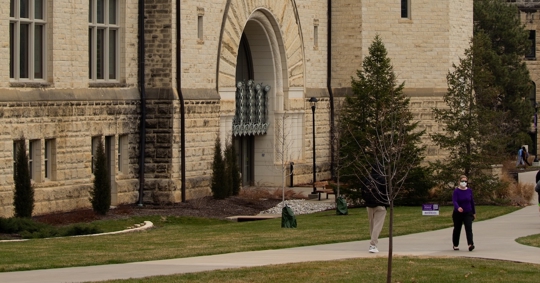
Jack Fleischaker, a 19-year-old freshman from Overland Park, has died of injuries he sustained after falling from a second-story window at the Sigma Chi house near Kansas State University in Manhattan earlier this month. Riley County police told local outlets there were no suspicions of foul play, and that alcohol was among the factors under review. Fleischaker was taken to Stormont Vail Hospital in Topeka, where more than 300 people lined the hallways for an honor walk before his organs were donated, according to a letter from his pastor at St. Thomas Episcopal Church in Overland Park.
Kansas State said in a statement that it is reviewing the incident under its own policies. Sigma Chi's international office called it a "heartbreaking accident" and said there is "no indication that anyone is at fault."
A Familiar Setting
The K-State chapter is not the same Sigma Chi chapter that lost its charter at the University of Kansas in 2022 after a hazing investigation, but it is the same national fraternity. Those two facts will sit next to each other in the months ahead.
The details don't yet reveal what exactly happened, but it’s in a setting that has produced fatal injuries before, and not infrequently. Andrew Coffey died at Florida State after a ritual that required new members to drink a handle of bourbon. Daniel Santulli survived a forced-drinking event at Missouri but cannot walk, see, or communicate. In each of those cases, the chapter had policies on paper that, if enforced, would have prevented the night.
Universities Can't Keep Waiting for Clarity to Act
Kansas State's statement says it is reviewing "available information to determine next steps in accordance with our policies and procedures." That is the standard language schools use after these incidents, and it is the language under which whole semesters pass before a chapter sees any consequence. The KU Sigma Chi chapter was shut down for hazing in 2022. The national pattern of fraternity hazing cases has not improved since.
The investigation will sort out whether what happened in that house meets the legal definition of negligence. The broader question—how many more before institutions act with the urgency the moment requires—remains the one worth asking. Our firm certainly hopes the answer here doesn't take long to arrive.